

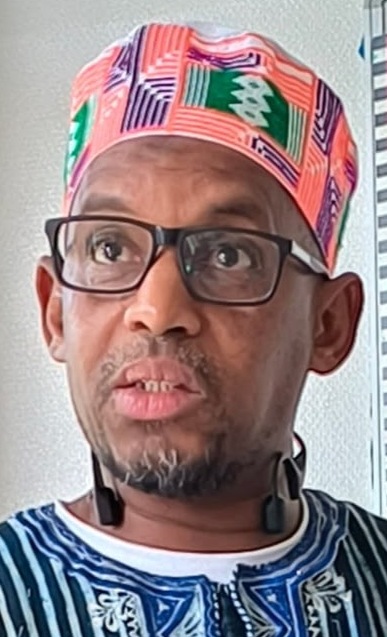
By Alpha Amadu Jalloh
Politics often reveals itself most clearly not during campaigns, rallies or elections but in moments of grief. When people gather to honour the dead, emotions become visible, loyalties become noticeable and silence sometimes becomes louder than speeches. The burial ceremony of the late Hon. Alhaji Dr. Minkailu Mansaray was expected to become one of those rare moments in Sierra Leonean politics where mourning would temporarily rise above division and where the All People’s Congress (APC) would project an image of unity before the nation.
Instead, as condolences poured in and Sierra Leone reflected on the passing of one of its most recognised political figures, public conversation appeared to move in a different direction. Increasingly, attention shifted toward the absence of APC’s 2023 presidential candidate, Dr Samura M.W. Kamara. Whether deserved or not, politics rarely leaves room for empty spaces and public life often interprets absence before explanations are ever offered.
Hon. Alhaji Minkailu Mansaray was more than a party administrator or a political elder. To many within the APC, he represented experience, continuity and institutional memory. He belonged to a generation that carried influence not simply through position but through longevity, discipline and familiarity with the political heartbeat of Sierra Leone. Even among political opponents, there was recognition that his contribution stretched beyond ordinary partisan competition.
The national response reflected that reality. Tributes emerged from different sectors of society and figures across political divides acknowledged his years of public service. Ordinary citizens reflected on his role in national life and the funeral itself became larger than a private farewell. It became a moment of national observation and political reflection. Within such an environment, every visible action and every visible absence naturally became part of public conversation.
To be fair, there are many reasons why an individual may not attend a burial ceremony. Public figures remain human beings with personal obligations, logistical realities, security considerations and private circumstances unknown to the wider public. Respect for the deceased is not always measured by physical presence and condolences can be expressed in different ways.
Yet, politics operates differently from ordinary life because symbolism carries weight. Moments of national importance often communicate values without requiring speeches. For many APC supporters, the burial of Hon. Alhaji Minkailu Mansaray represented more than a farewell. It became an opportunity for party stakeholders to stand together and send a message that whatever disagreements exist internally, the larger institution remains united.
That expectation explains why questions emerged.
The issue for many observers is not necessarily whether Dr Samura Kamara attended or failed to attend. The greater concern is what people believe such moments reveal about the current state of the APC. Since the 2023 elections, conversations around leadership, succession and the future direction of the opposition have remained visible within national discourse. Like many political organisations recovering from electoral disappointment, the APC continues to navigate competing visions about how to rebuild and reposition itself.
There is nothing unusual about internal debate. Every serious political movement experiences periods of reflection and adjustment. The challenge arises when public perception begins to interpret normal internal discussion as visible division. Citizens observing from outside rarely analyse internal explanations. They respond to what they see and form conclusions based on atmosphere, symbolism and moments.
That is why occasions such as these become politically significant. For supporters hoping to see the APC project readiness, discipline and cohesion, ceremonies involving respected party figures become more than cultural obligations. They become opportunities to reassure members and supporters that the party remains focused on a shared purpose. If such moments generate more questions than reassurance, leadership inevitably faces pressure to address perception.
This should not become an exercise in assigning motives where facts remain unknown. Sierra Leone’s politics already suffers from excessive speculation and unnecessary personalisation. However, moments like this invite legitimate reflection about what image parties want to project and how political symbolism shapes public confidence.
Perhaps there is another lesson hidden within the passing of Hon. Alhaji Minkailu Mansaray himself. Political offices change. Campaigns end. Influence shifts. Power moves. Yet, reputation and legacy remain long after positions disappear. Those who knew the late chairman often describe him as a believer in party structure, political discipline, and institutional continuity above individual ambition.
That reflection now belongs to those who remain. Among them stands Dr Samura M.W. Kamara and the broader APC leadership. This is not because one funeral determines political destiny because it does not. It matters because moments create narratives and narratives influence trust. As Sierra Leone moves forward and the APC prepares for its future, supporters may not only remember speeches made during this period. They may remember the atmosphere, the symbolism and the images that defined the moment.