

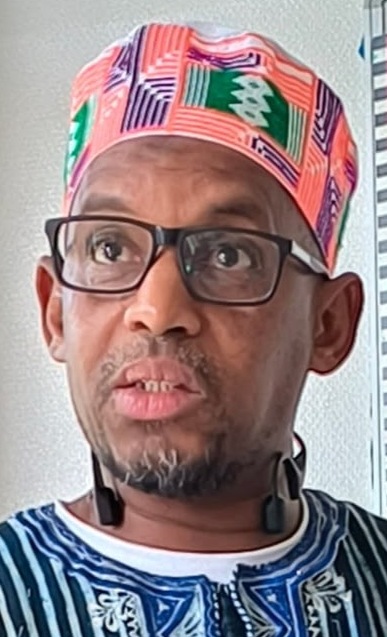
By Alpha Amadu Jalloh
A republic is not a gift that rests comfortably in the hands of a people. It is a fragile covenant, a living agreement between power and responsibility, between leadership and accountability, between the present and the future. It demands vigilance, sacrifice, and above all, honesty. When the words “we have a republic if we can keep it” were spoken in another time and place, they carried a warning as much as a promise. They acknowledged that the true test of a republic is not in its declaration, but in its preservation.
For Sierra Leone, the journey into republicanism on 19 April 1971 was meant to be a defining moment. It came just shy of the tenth anniversary of independence from Britain, a time when the nation was still shaping its identity and direction. On that day, Siaka Stevens ascended as the first executive President of the republic. It should have been a transition rooted in the strengthening of democratic values, a step toward consolidating independence and deepening the participation of citizens in governance. Instead, history tells a different story.
The transformation into a republic was not driven by the collective aspirations of the people nor by a genuine desire to build a system grounded in accountability and institutional strength. It became an avenue for the concentration of power, the elevation of one man above the system, and the gradual erosion of democratic safeguards. What was meant to liberate became a tool for control. What was meant to empower became a structure for exclusion.
Soon after, Sierra Leone descended into a one party state. This was not an accidental drift. It was a deliberate design. The idea of opposition, which is essential in any functioning republic, was systematically weakened and eventually silenced. A republic without opposition is not a republic. It is a controlled space where power speaks to itself and listens to no one else. In such an environment, the voices of ordinary citizens are reduced to whispers, and those whispers are often ignored.
One of the most telling aspects of that era was the manipulation of traditional authority structures. Paramount chiefs, who historically served as custodians of community interests and as a bridge between the state and the people, were drawn into parliament. On the surface, this could have been interpreted as inclusion. In reality, it became a strategy of control. By bringing these chiefs into the orbit of the executive, they were placed under constant watch, their independence compromised, their loyalty redirected.
Instead of serving their communities with impartiality and courage, many found themselves entangled in a system that demanded allegiance to power rather than commitment to the people. Their role shifted from balancing authority to reinforcing it. The consequences of this shift were profound. Communities lost an essential layer of protection. The exploitation of local resources became easier. The political system tightened its grip, reaching even into the most remote corners of the nation.
At the same time, the lines between civilian governance and security institutions were blurred. Military and police heads were elevated into cabinet positions. This was not merely an administrative choice. It was a signal. It suggested that the instruments of force were now integral to the machinery of governance. When those who are meant to enforce the law become deeply embedded in political decision making, the risk of abuse increases. The fear of dissent grows. The republic begins to resemble something else entirely.
A true republic relies on the separation of powers. It depends on institutions that can check each other, question each other, and hold each other accountable. When those boundaries are erased, power becomes centralized, and centralized power rarely restrains itself. It expands, often at the expense of freedom and justice.
The tragedy of Sierra Leone’s republican journey is not only in what happened during that period, but in the patterns that have persisted long after. The legacy of centralized control, weakened institutions, and compromised accountability did not end with one administration. It became embedded in the political culture. It shaped expectations. It influenced behavior. It created a system where the struggle for power often takes precedence over the responsibility of governance.
This is why reflection is not a luxury. It is a necessity. As I stated in my book “Monopoly of Happiness: Unveiling Sierra Leone’s Social Imbalance”, we must return to the drawing board. We must revisit our history with honesty, not with nostalgia or selective memory, but with a willingness to confront uncomfortable truths. Progress is impossible without understanding the roots of our challenges.
Revisiting history is not about assigning blame alone. It is about identifying patterns, recognizing mistakes, and ensuring that they are not repeated. It is about asking difficult questions. Why did we allow the concentration of power to go unchecked? Why were institutions not strong enough to resist manipulation? Why did voices that should have spoken out remain silent? These questions do not weaken us. They strengthen us, because they open the door to change.
Keeping a republic requires more than constitutional provisions. It requires a culture of accountability. It requires citizens who are informed, engaged, and willing to demand better. It requires leaders who understand that power is a trust, not a possession. It requires institutions that function independently, guided by principles rather than personalities.
The role of the citizen cannot be overstated. A republic is sustained by the active participation of its people. When citizens disengage, when they accept injustice as normal, when they trade long term stability for short term gain, the foundation of the republic begins to crack. Silence becomes complicity. Indifference becomes a threat.
At the same time, leadership must rise to a higher standard. The pursuit of power for its own sake is incompatible with the ideals of a republic. Leadership must be anchored in service, guided by integrity, and measured by impact. It must be willing to listen, to be questioned, and to be held accountable. Without these qualities, the structures of a republic become hollow, existing in form but not in substance.
There is also a need to rebuild trust. Trust between the government and the governed. Trust between institutions and the people they serve. Trust is not built through rhetoric. It is built through consistent action, through transparency, through fairness. Once broken, it is difficult to restore, but without it, a republic cannot function effectively.
The journey ahead is not simple. It will require courage. It will require sacrifice. It will require a collective commitment to change. The process of rebuilding institutions, strengthening accountability, and reshaping political culture is not quick. It is gradual. It demands patience and persistence.
Yet, it is worth it. Because the alternative is a cycle that repeats itself, a pattern of power concentration, institutional weakness, and public disillusionment. That is not a future that serves the people of Sierra Leone. That is not a future that honors the sacrifices made for independence.
A republic, in its truest sense, is a promise. It is a promise that power belongs to the people. It is a promise that governance will be conducted in their interest. It is a promise that justice will be upheld. Keeping that promise is not the responsibility of one individual or one generation. It is a shared responsibility, carried across time.
Sierra Leone stands at a point where reflection and action must come together. The lessons of the past must inform the decisions of the present. The mistakes that weakened the republic must guide the reforms that will strengthen it. The voices that were once silenced must now be heard.
We have a republic. That much is clear. The question that remains is whether we can keep it. Not in name, not in ceremony, but in practice. Keeping it means protecting its principles. It means defending its institutions. It means ensuring that power remains accountable.
History has shown what happens when a republic is taken for granted. It has shown how quickly ideals can be compromised, how easily structures can be manipulated, how deeply the consequences can be felt. But history also offers an opportunity. It offers a chance to learn, to adapt, to do better.