

As the Sierra Leone People’s Party (SLPP) steadily approaches a post-Bio political phase, a serious and unavoidable question now confronts the party. It is not simply about who leads next, but how leadership is shaped in a way that preserves unity, credibility, and national confidence.
The SLPP has governed through difficult times, absorbed heavy criticisms, and carried the weight of national expectation. It would be a grave error for such a party to weaken itself through unmanaged ambition and internal anxiety. Within this moment, the idea of a joint ticket featuring Dr Mohamed Juldeh Jalloh and Dr David Moinina Sengeh deserves sober, disciplined, and honest reflection.
This is not a call for coronation, nor is it an attempt to shut down ambition. It is an invitation to think strategically, beyond personalities, beyond camps, and beyond the short-term thrill of internal competition.
Across the SLPP today, signs of early fragmentation are visible. New groups are forming, loyalties are being tested, and alignments are being whispered long before any formal process has begun. These developments do not signal strength. They signal uncertainty. When a governing party lacks a stabilizing centre, ambition multiplies without direction. Energy that should be invested in governance, policy consolidation, and national engagement is instead consumed by internal positioning.
A Juldeh Jalloh–Sengeh ticket offers a credible anchor around which ambition can be structured rather than suppressed. Such a configuration has the potential to calm internal tensions, redirect focus, and encourage cooperation over rivalry. It would immediately change the internal psychology of the party from competition to coordination, from suspicion to alignment, and from fragmentation to shared purpose.
Leadership, after all, is not about standing in front and shouting the loudest. As Nelson Mandela once observed, a leader is like a shepherd who guides from behind, allowing others to move forward while ensuring the flock remains united. That philosophy captures the essence of what the SLPP now requires.
What makes this proposed pairing compelling is not similarity, but balance expressed through different strengths.
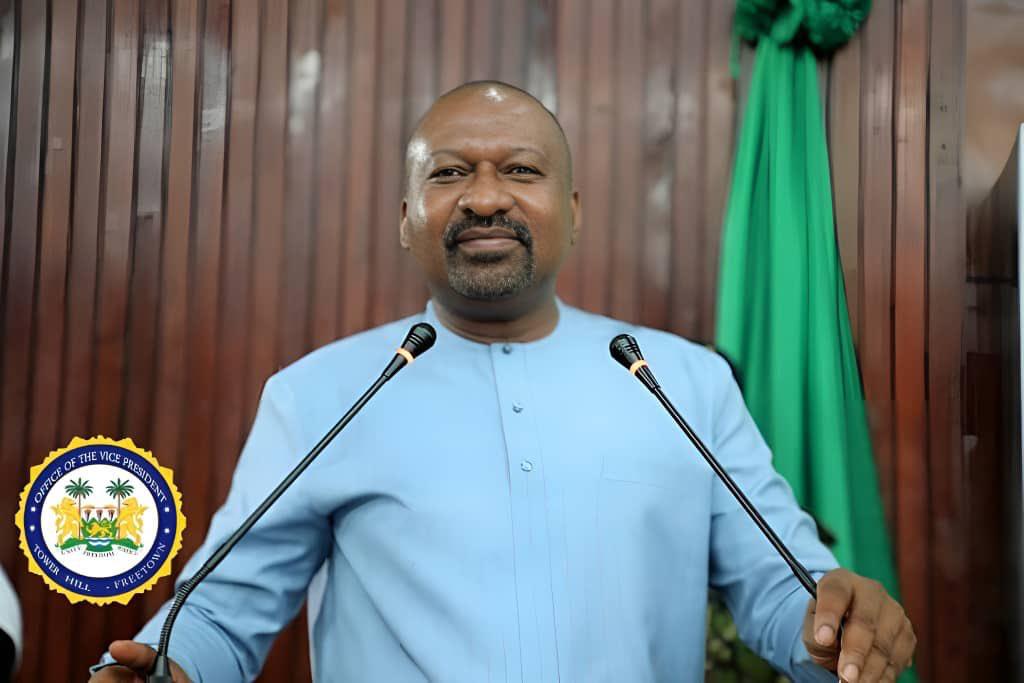
Dr Mohamed Juldeh Jalloh brings executive maturity, institutional depth, and international credibility to the centre of any serious leadership conversation. As Vice President, he operates daily at the highest levels of state responsibility. He engages multilaterally, manages complex diplomatic relationships, and represents Sierra Leone in environments where authority is earned through composure, discipline, and trust. These are not ceremonial roles. They are the mechanics of governance and statecraft.
Among young Sierra Leoneans, particularly educated youth, professionals, and globally exposed voters, this profile resonates more than is often acknowledged. Many young people are not drawn solely to noise or performance. They are drawn to competence, seriousness, and leaders who can command respect beyond national borders. Juldeh Jalloh’s calm should not be mistaken for passivity. It is controlled authority. In an uncertain global climate, stability itself has become a modern political asset.
Dr David Moinina Sengeh brings a different but equally important strength. He represents reform energy, intellectual confidence, and generational engagement. His visibility is grounded in ideas, policy discourse, and accessibility. He speaks fluently to students, educators, technologists, and first-time voters who want leadership that understands the future economy and is willing to explain reform rather than hide behind slogans. His readiness to engage debate and own both progress and limitation has earned him credibility beyond traditional party lines.
Age, often weaponized as either a liability or a slogan in Sierra Leonean politics, becomes an advantage in this pairing. Juldeh Jalloh represents seasoned maturity without political exhaustion. He has the experience to govern and the composure to withstand pressure, yet he is not disconnected from contemporary realities. Sengeh, on the other hand, represents generational proximity without recklessness. He understands the urgency of youth aspirations while operating within the discipline of state responsibility. Together, they collapse the false divide between “old guard” and “new generation” and present leadership as a continuum rather than a confrontation.
This is not a case of one figure being visible and the other invisible. It is a case of two different kinds of visibility. One anchored in governance, diplomacy, and executive trust. The other rooted in public engagement, reform advocacy, and generational mobilisation. Together, they form a complete leadership spectrum that modern politics increasingly demands.
An African proverb reminds us that while one may go fast alone, it is only together that one goes far. That wisdom applies directly to the SLPP’s current moment.
Regionally and socially, the combined reach of Juldeh Jalloh and Sengeh strengthens the party rather than narrowing it. Neither figure over-concentrates influence in a single bloc. Instead, their networks broaden the party’s appeal across regions, classes, and generations. Juldeh Jalloh reassures elders, professionals, moderate voters, and international partners seeking continuity and competence. Sengeh energizes youth, urban voters, educators, and reform-minded constituencies seeking ideas and momentum.
This balance avoids the destructive trap of personality competition. It positions the Vice President as the senior stabilizing force, with Sengeh as a complementary driver of renewal. That relationship feels natural, credible, and electorally intelligent. It sends a powerful message that leadership is not a contest of egos, but a division of responsibility.
Internally, such a ticket would significantly reduce tension. Many of the smaller formations currently thriving on uncertainty would lose momentum once a credible centre emerges. Their influence depends on ambiguity. When clarity appears, politics shifts from endless posturing to negotiation and coalition building. This is how serious political organisations manage ambition, not through intimidation or exclusion, but by making fragmentation politically costly.
Nationally, the signal would be equally important. Sierra Leoneans are fatigued by leadership instability and constant internal drama. They want reassurance that governance will remain steady while reform continues. A ticket combining executive authority with reform energy answers that expectation. It also deprives the opposition of easy narratives built on internal division and uncertainty.
At this stage, the role of President Julius Maada Bio becomes critical. Party stability does not happen by accident. It requires tone, restraint, and leadership example. The President must actively discourage premature factionalism and remind party members that internal discipline is inseparable from governance credibility. By fostering dialogue, reinforcing respect for process, and making unity a political value rather than a slogan, he can help guide the party toward a managed transition rather than a bruising internal contest.
This does not require endorsing any ticket prematurely. It requires statesmanship. It requires calling senior figures together, encouraging restraint, and making it clear that ego-driven politics will not be indulged at the expense of party cohesion and national stability.
Other aspirants within the SLPP must also pause and reflect. Ambition is not a sin. But unchecked ambition, driven by ego and selfish calculation, has destroyed many once-strong political movements across Africa. The SLPP must not repeat that history. Those who genuinely care about the party must see themselves as contributors to a collective project, not lone contenders in a personal race.
Putting ego aside is not surrender. It is leadership. Choosing unity over vanity is not weakness. It is maturity.
A Juldeh Jalloh–Sengeh ticket is not a cure-all. But it is a serious proposition, worthy of thoughtful debate rather than reflexive resistance. Parties that fail to manage succession often unravel from within. Those that succeed recognise moments of alignment and act with discipline.
The SLPP has such a moment before it. What remains is the courage to see leadership not as dominance, but as stewardship. If the party can rise above narrow calculations and place collective interest first, 2028 can become a moment of renewal rather than internal exhaustion.
The question is not whether Dr Mohamed Juldeh Jalloh and Dr David Moinina Sengeh are flawless. No leader is. The question is whether together they offer the most viable path toward unity, stability, and forward momentum at a time when the party and the nation can afford neither paralysis nor reckless experimentation.
That is a question the SLPP must now confront with seriousness, humility, and honesty.