

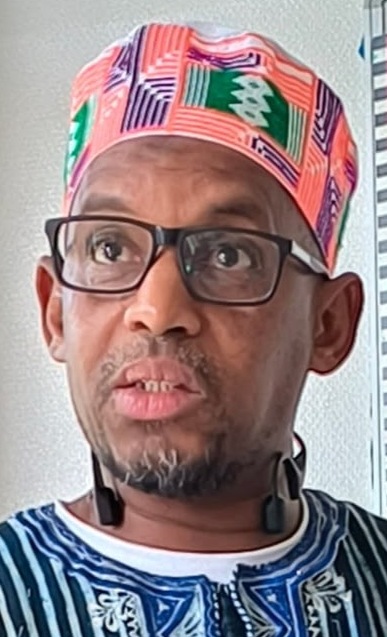
By Alpha Amadu Jalloh
There is a dangerous ease with which some people in Sierra Leone speak about violence today. It rolls off the tongue like an ordinary suggestion, like a tool that can be picked up and dropped at will. In political discussions, in community grievances, on social media, and even in private conversations, the language of confrontation is becoming normal. People speak of “teaching others a lesson,” of “fighting back,” of “meeting force with force,” without ever pausing to consider what they are truly inviting into our society.
Violence is not a slogan. It is not a strategy you test and discard when it fails. Violence has a weight—heavy, unforgiving, and permanent. Those who casually promote it often do so from a distance, far removed from the blood, the loss, and the irreversible damage it brings. They do not carry its consequences, yet they are quick to encourage others to embrace it.
Sierra Leone is not unfamiliar with violence. The memories of the Sierra Leone Civil War are not abstract history; they live in our scars, in amputated limbs, in broken families, and in the silence of those who witnessed horrors too painful to describe. Entire communities were erased in moments. Children became soldiers. Trust dissolved. Fear became a daily language. That is the true weight of violence.
And yet, even at the height of that brutality, attempts were made to stop it through dialogue. The Abidjan Peace Accord was signed with hope that negotiation could end the bloodshed. It failed. Then came the Lomé Peace Accord, another attempt to silence the guns through compromise. It too collapsed under the pressure of mistrust, ambition, and unresolved grievances. These were not mere documents; they were desperate efforts to contain a fire that had already grown beyond control.
What do these failures teach us? They remind us that once violence takes root, even peace becomes fragile. Agreements are signed, but they struggle to hold. Promises are made, but they are easily broken. Violence does not just destroy lives; it erodes the very mechanisms needed to restore peace.
Today, some speak as though violence can be introduced in small doses, as though it can be managed differently this time. That is a dangerous illusion. We have already seen how quickly things can spiral, how quickly a nation can lose control of its own destiny.
After the war, Sierra Leone made a commitment to truth and reconciliation. The Truth and Reconciliation Commission gathered testimonies, documented atrocities, and laid bare the causes and consequences of the conflict. Its report was meant to guide us to ensure that we never repeat the same mistakes, to provide a roadmap for justice, healing, and national unity.
But what has become of that report? In too many ways, it feels as though it is gathering dust in some forgotten corner, neglected, unimplemented, and unrespected. The lessons paid for with blood have not been fully absorbed. The recommendations meant to strengthen our institutions and protect our people remain largely ignored. It is as if we have chosen selective amnesia, remembering the pain but not the responsibility that comes with it.
And now, with that history behind us, some still find it easy to call for violence.
Those who promote violence often present it as strength. They frame it as courage, as resistance, as justice. But there is nothing courageous about leading people into chaos without a plan to protect them from its consequences. There is nothing just about unleashing harm that will not distinguish between the guilty and the innocent. Violence does not operate with precision; it spreads, it escalates, and it consumes far more than its intended target.
History has already shown us this pattern. What begins as a targeted act quickly becomes a cycle. Retaliation follows retaliation. Communities turn against each other. Lines are drawn that were never there before. And once those lines harden, they are difficult sometimes impossible to erase.
There is also a deep hypocrisy in many of these calls. Those who shout the loudest are often the safest. They are not the ones who will flee their homes. They are not the ones who will bury loved ones. They are not the ones who will carry trauma for the rest of their lives. They speak from comfort, while others pay the price.
This is not leadership. It is abandonment.
Sierra Leone today faces real challenges economic pressure, political tension, frustration among the youth, and a growing sense of inequality. These are serious issues that demand serious solutions. But violence is not a solution; it is an accelerant. It takes existing problems and sets them ablaze, creating new crises that overshadow the original grievances.
We must also think about the future. What kind of nation are we shaping if violence becomes a normalized response to disagreement? What are we teaching the next generation if we present destruction as a legitimate form of expression? A society that embraces violence as a tool risks losing its moral compass entirely.
The tragedy is that we have already walked this road. We have already seen where it leads. We have already buried the dead, mourned the lost, and struggled to rebuild what was destroyed. To return to that path knowingly would not just be a mistake—it would be a betrayal of everything we have endured.
Words carry weight. When people with influence speak, they shape actions. Encouraging violence is not harmless rhetoric; it is a spark. And in a nation with a history like ours, even a small spark can ignite something far beyond control.
This is not a call for silence in the face of injustice. Sierra Leoneans have every right to demand accountability, to challenge leadership, to speak out against wrongdoing. But there is a clear line between advocacy and incitement. One builds; the other destroys.
True strength lies in restraint. It lies in discipline. It lies in the ability to confront problems without tearing apart the fabric of the nation. It requires courage to hold back when emotions run high, to choose dialogue when anger demands confrontation, to build when destruction feels easier.
We must also revive the spirit of the lessons we once promised to uphold. The findings of the Truth and Reconciliation Commission should not remain buried in neglect. They should be revisited, taught, and implemented. They should inform how we govern, how we resolve disputes, and how we protect our people from ever descending into such darkness again.
Community leaders, religious institutions, educators, and citizens all have a role to play. We must actively reject narratives that glorify violence. We must create spaces for dialogue, for understanding, for peaceful engagement. We must remind ourselves that beyond our differences, we share a common destiny.
To those who continue to promote violence, the question remains: do you understand its weight?
Do you understand what it means to lose control of a nation’s stability? Do you understand the cost of broken families, shattered communities, and lost generations? Do you understand how long it takes to rebuild trust once it is destroyed?
If history has taught us anything, it is this: violence is easy to start, but almost impossible to contain.
Sierra Leone cannot afford another lesson written in blood. Not after the war. Not after the failed accords. Not after the truth we uncovered and then neglected. We owe it to ourselves—and to those who did not survive—to choose a different path.
Violence is not a tool to be tossed around carelessly. It is a force that reshapes everything in its path. And those who do not understand its weight have no business calling for it.
The future of Sierra Leone depends on what we choose now. Let it not be a future that repeats the past, but one that learns from it with clarity, responsibility, and the courage to do better.