
By Lemuella Tarawallie
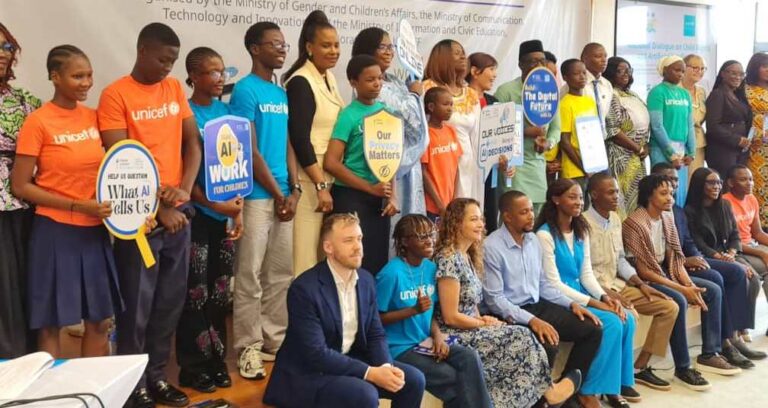
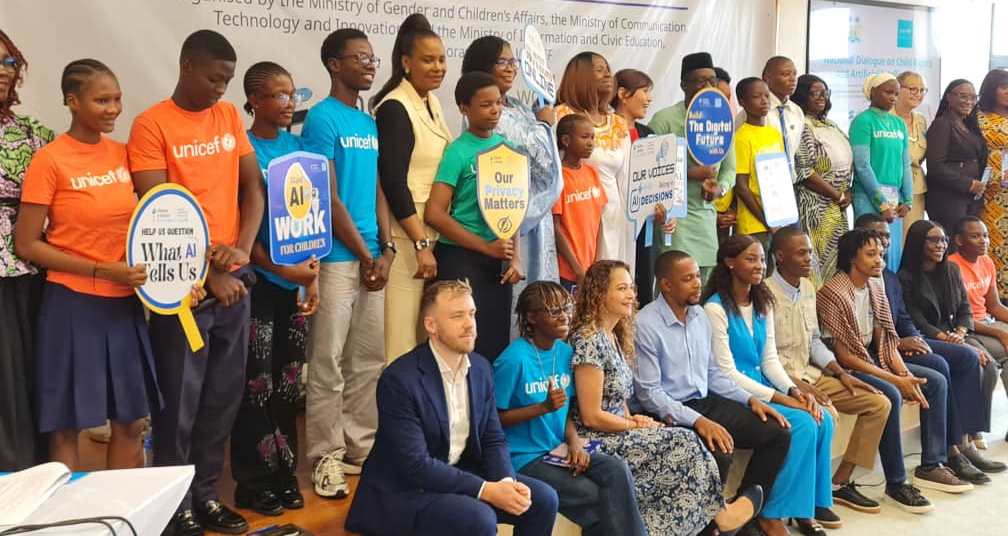
UNICEF, in partnership with the Government of Sierra Leone, has officially launched the Child Rights Act 2025 and convened a National Dialogue on Child Rights and Artificial Intelligence (AI), placing children’s voices, digital safety and equal access to technology at the centre of national discussions on the country’s digital future.
The event was held on Monday 23 November 2026 at the Ministry of Foreign Affairs in Freetown,
The Child Rights Act 2025 was officially launched by the Minister of Planning and Economic Development, Dr Kanyeh Bailey, as part of activities marking World Children’s Day and UNICEF’s 80th anniversary celebrations.
The dialogue sought to ensure that children participate meaningfully in national conversations about how artificial intelligence can advance their opportunities while protecting their rights, privacy and wellbeing.
UNICEF Chief of Communication and Advocacy, Suzanne Wooster, said the engagement was informed by consultations with children across Sierra Leone, who shared their experiences, expectations and concerns about artificial intelligence.
She explained that their contributions would inform UNICEF’s Global Children’s Manifesto on Child Rights and AI, which is expected to be presented to governments and technology companies in 2027.
UNICEF Country Representative, Mariko Kagoshima, emphasised that children must not be left behind in the country’s digital transformation. She noted that artificial intelligence could simplify access to information, including translating complex laws and policies into languages children understand, such as Krio.
However, she cautioned that children without digital devices, reliable internet connectivity and the necessary skills risk being excluded from emerging opportunities.
In her statement on protecting children in the digital age, Minister of Gender and Children’s Affairs, Dr Isata Mahoi, warned that technological advancement was creating new forms of vulnerability, including cyber-bullying, online exploitation, identity theft, harmful content and digital harassment.
“Children must not simply be users of technology; they must be protected participants in the digital ecosystem,” she stressed.
Dr Mahoi called for a coordinated, whole of government approach involving relevant ministries, parents, caregivers, law enforcement agencies and development partners. She also highlighted the importance of protecting children’s personal data, strengthening online safety and promoting responsible innovation.
Minister of Information and Civic Education, Chernor Bah, drew on his experience as a former child rights advocate and President of the Children’s Forum Network, stressing that children must be involved in shaping policies that affect their future.
“Do not allow artificial intelligence to replace your own intelligence, your curiosity, your creativity and your capacity to think differently,” he urged children.
United Nations Resident Coordinator, Seraphine Wakana, called for a rights based and inclusive digital future, warning that girls, children with disabilities and those in rural communities could face greater inequalities without deliberate investment in connectivity, digital devices and digital literacy.
A highlight of the dialogue was a presentation by child representatives from Koinadugu and Moyamba Districts, who outlined children’s experiences with AI, including its potential to support learning, creativity and communication. They also called for stronger privacy safeguards, equal access and meaningful participation in decisions concerning digital technology.
Delivering the keynote address, Dr Bailey acknowledged children’s growing influence on national policymaking, noting that their contributions had helped shape priorities in the Medium Term National Development Plan, including the passage of the Child Rights Act 2025.
The programme also featured a high level public private partnership dialogue on shaping Sierra Leone’s AI future, moderated by former Children’s Forum Network President Mariam Samai, as well as UNICEF’s video presentation featuring children’s perspectives on artificial intelligence from around the world.
The event concluded with an interactive session titled “Children at the Crossroads: Pick a Corner, Make a Commitment”, during which the Minister of Gender and Children’s Affairs, the Minister of Information Education and Civic Education, the Minister of Planning and Economic Development and representative from the Ministry of Communications Technology and Innovation responded to children’s demands on digital inclusion, online safety, responsible AI and child participation in policymaking.