

By Lemuella Tarawallie
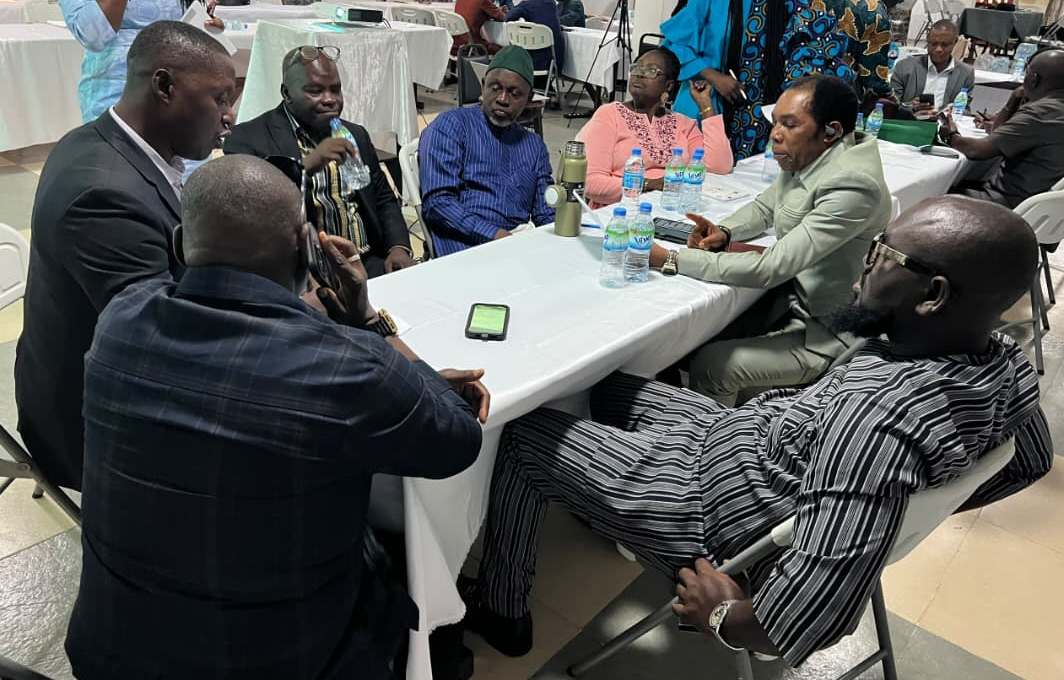
The Parliamentary Oversight Committee on Defence and National Security and the Parliamentary Oversight Committee on Internal Affairs have commenced a three-day capacity building workshop aimed at strengthening Parliament’s ability to exercise effective oversight of Sierra Leone’s defence, security and internal affairs sectors.
The workshop, which runs from Tuesday 6 to Thursday 8 October 2026 at Madella Hall in Bo, is supported by the African Union Commission, the European Union and GIZ through the ECOWAS Peace, Security and Governance programme.
The training brings together Members of Parliament and administrative staff of the two Committees to deepen their understanding of democratic oversight, accountability, civilian control, security sector reform, budget scrutiny, human rights and the rule of law.
Opening the workshop on behalf of the National Security Coordinator, the Deputy National Security Coordinator, Dr Ahmed A. Sannoh, said national security should be regarded as a shared national responsibility rather than the sole responsibility of security institutions.
“National security is not a responsibility of a security institution. It is a shared national responsibility exercised within a constitutional order and ultimately in the service of our people,” Dr Sannoh stated.
He said Parliament had an important role in the national security architecture through legislation, budgetary scrutiny, oversight and accountability, while stressing that effective oversight should complement rather than undermine the operational responsibilities of security institutions.
Dr Sannoh further noted that Sierra Leone’s security environment was changing, with organised crime, trafficking, border insecurity, cyber threats, misinformation, disinformation and violent extremism requiring credible information, strategic foresight, evidence-based decision making and stronger institutional coordination.
Representing the Speaker of Parliament, the Deputy Clerk Gilbert Bosco N’habay, said the workshop was an investment in the institutional foundations of democratic governance, national security and the protection of citizens.
He stressed that security institutions must be capable of protecting the State and its citizens while remaining subject to the Constitution, the law, democratic authority and appropriate accountability mechanisms.
Chairperson of the Parliamentary Oversight Committee on Defence and National Security, Hon Alex Mattia Rogers, said the inclusion of the Parliamentary Oversight Committee on Internal Affairs was necessary because national security extended beyond traditional defence structures and involved institutions such as the police and immigration authorities.
He said the engagement was intended to strengthen the capacity of Members of Parliament, committee staff and the wider institution of Parliament to conduct effective parliamentary oversight.
Hon. Rogers also pointed to the ongoing Yenga issue, saying parliamentary diplomacy had been adopted as part of efforts to address the matter. He expressed confidence that discussions involving regional partners would further contribute to resolving the issue.
Representing the Leader of Government Business, the Chair of the Parliamentary Legislative Committee, Hon. Abdul Sulaiman Marray-Conteh said strong parliamentary oversight did not mean undermining the operational independence of security institutions.
“Parliament therefore has the critical constitutional responsibility to ensure that the institutions entrusted with the security of the State operate within the law, respect human rights, use public resources responsibly and remain accountable to the people,” he said.
Hon. Rose Mary Bangura, representing the Leader of the Opposition Bench, called for a shift from traditional defence concepts towards modern security sector reform, emphasising governance, accountability, human rights and community trust.
The workshop is also examining the African Union and ECOWAS frameworks on security sector reform, constitutional and legal foundations of parliamentary oversight, security budgets and financial oversight, human rights, gender responsive oversight, regional security dynamics, evidence gathering, committee hearings and follow up on parliamentary recommendations.
The African Union Commission representative, Osei Baffour Frimpong, said effective parliamentary oversight was central to accountable and democratic security sector governance, while ECOWAS Resident Representative Ambassador John Azumah urged Parliament to go beyond ceremonial oversight and strengthen its scrutiny of security policies, budgets and programmes.
The European Union delegation also reaffirmed its support for stronger democratic accountability, stressing that effective security institutions and parliamentary oversight should reinforce each other.
The three-day engagement produced practical recommendations and stronger institutional mechanisms for parliamentary scrutiny, accountability and cooperation between Parliament and security institutions.