

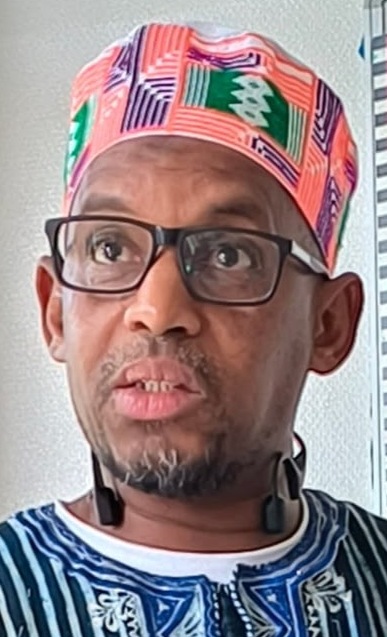
By Alpha Amadu Jalloh
President Julius Maada Bio may have made one of the most consequential political calculations of his presidency, not by trusting Sierra Leone’s youths, but by assuming that youthfulness, impressive academic credentials and international exposure would automatically translate into disciplined leadership. He handed a new generation something young Sierra Leoneans had demanded for decades: real political power. Ministries, Commissions, State House responsibilities and influential public institutions were placed in younger hands. The expectation was that fresh faces would bring fresh thinking, greater urgency and a decisive break from the habits of the old political establishment. Instead, some of those appointments exposed an uncomfortable contradiction: the faces became younger, but some of the political habits remained painfully old.
That contradiction now threatens to become part of Bio’s political legacy. A President who invested heavily in human-capital development eventually placed some of the products and symbols of that philosophy at the centre of government. They were expected to demonstrate that education could improve governance, generational change could strengthen institutions and young leaders could replace political entitlement with innovation and performance. Yet in some cases, the country witnessed premature political ambition, battles for visibility, social-media self-promotion, questionable judgment, controversies and an appetite for the privileges of office that sometimes appeared greater than the urgency to produce measurable results.
The bitter irony is difficult to ignore. For years, young Sierra Leoneans complained that the older political generation refused to give them space. Bio gave some of them space. They demanded seats at the table; he placed some near the head of it. They asked to be trusted; he entrusted some with ministries, commissions and national programmes. They argued that education, technology and international exposure had prepared their generation to govern differently. The opportunity finally arrived, and while some justified that confidence through serious work, others demonstrated that replacing an older politician with a younger one does not necessarily change the politics.
The story goes back to 2018. Following his electoral victory, Bio entered office carrying enormous expectations, particularly among young Sierra Leoneans. Jobs, education, human-capital development and youth participation were central to the hope surrounding his presidency. Ambitious employment promises raised expectations across a country where young people desperately wanted economic opportunities. Yet the deeper problem was never simply the absence of jobs. Sierra Leone also faced the uncomfortable question of whether education and qualifications were being matched by practical skills, discipline, work ethic, character and institutional responsibility.
Having certificates does not automatically make someone employable, competent or prepared for leadership. The expression “dangerously educated,” publicly associated with Anti-Corruption Commissioner Francis Ben Kaifala, captures part of this contradiction. Sierra Leone has produced young men and women with impressive academic qualifications, international exposure and polished résumés, but education without humility, competence, integrity and emotional maturity can become another national problem. A degree can open the door, but character determines what someone does after entering the room.
By his second term, Bio went considerably further. The face of government became noticeably younger, with young professionals occupying influential positions across ministries, commissions and public institutions. The message was unmistakable: young Sierra Leoneans could no longer complain that nobody trusted them with serious responsibility. They had been given the keys. The question was no longer whether young people would be allowed into the room; the question became what they would do once they were inside.
Fairness, however, demands an important distinction. Not every young appointee failed. Some younger officials have demonstrated competence, embraced technology, pursued reforms, improved systems and carried national responsibilities professionally. Beyond government, young Sierra Leoneans continue to distinguish themselves in business, civil society, technology, education, journalism, community leadership and professional institutions. Their achievements prove precisely why young people must continue receiving opportunities to lead.
Indeed, successful young leaders make the failures of others harder to excuse. If one young appointee can exercise restraint, concentrate on the institution entrusted to him or her and produce measurable results, another cannot indefinitely hide behind youth or inexperience to explain poor judgment or non-performance. Youthfulness may justify a learning curve; it cannot become immunity from accountability.
Too often, however, appointment appeared to become an invitation to personal transformation rather than national transformation. Big vehicles, international travel, social-media branding, photographs, awards, ceremonies and political connections became powerful symbols of arrival. None of these things alone proves misconduct, and the private lifestyles of public officials should not become substitutes for evidence-based scrutiny. The legitimate political question is much simpler: does the visibility surrounding an official match the measurable performance of the institution entrusted to that person?
Sierra Leone did not need young people in government merely to produce younger faces around the Cabinet table. The country needed innovators, administrators, reformers and disciplined public servants capable of translating education into results. An unemployed graduate cannot eat photographs from an international conference, a struggling trader cannot pay rent with somebody else’s award, and a desperate young person does not become employable because another young Sierra Leonean has acquired a government title.
Then came the politics of succession. President Bio warned against premature campaigning for the SLPP flagbearership. The instruction made political sense because a government elected to deliver a second-term programme cannot afford to spend precious time fighting over who inherits political power. Yet succession conversations continued. Names circulated, camps developed, supporters mobilised and social-media battles intensified while Sierra Leone continued confronting unemployment, Kush, economic hardship, agriculture, education, infrastructure and institutional reform.
A minister looking too aggressively towards the next political appointment risks losing concentration on the current one. An official building a personal political network may begin calculating loyalty differently. Government colleagues become potential rivals, experienced party stalwarts become obstacles and public programmes risk becoming platforms for personal political visibility. Government cannot become a waiting room for 2028 while Sierra Leoneans struggle with the problems of today.
This is particularly damaging because Bio’s central political investment has been human-capital development. Education was supposed to create a generation capable of thinking differently, governing differently and producing differently. If beneficiaries of that philosophy enter government only to reproduce arrogance, entitlement, political intrigue and self-interest associated with the political culture they were expected to improve, then what exactly has changed?
A university degree does not automatically produce wisdom, and a doctorate does not manufacture integrity. Excellent English does not make someone an effective administrator, international exposure does not guarantee patriotism, youthfulness does not automatically produce innovation, and dominating social media certainly does not mean someone knows how to govern. Education is enormously important, but leadership requires character, judgment, restraint and accountability alongside qualifications.
The disappointment becomes greater when ordinary young Sierra Leoneans continue confronting unemployment, Kush addiction, poverty, irregular migration and uncertainty about their futures. A young public official enjoying the privileges of government should be able to look at another young Sierra Leonean struggling on the streets and recognise that both belong to the same generation. One simply received an opportunity the other did not. Such privilege should produce humility and urgency, not entitlement.
None of this absolves President Bio. Presidents choose their appointees, establish standards, supervise performance and possess significant authority to remove those who fail. If young officials have failed him, it is equally legitimate to ask whether underperformance was tolerated for too long, whether political loyalty sometimes competed with competence and whether accountability was consistently enforced. Keeping a repeatedly ineffective appointee eventually makes that failure presidential.
This is why the remaining period of Bio’s presidency must become an accountability test. Every minister, commissioner, director and presidential appointee should be measured against clear results. What were they appointed to accomplish? What targets were established? What public resources were entrusted to their institutions? What programmes have been delivered? What measurable difference can ordinary Sierra Leoneans identify?
Those who have performed should be recognised. Those who require reasonable support should receive it. But persistent non-performance should have consequences. Youthfulness should not provide immunity from accountability, academic qualifications should not protect incompetence, party loyalty should not substitute for results, and proximity to political power should never become insurance against scrutiny.
Where credible allegations of corruption or abuse of office arise, the appropriate institutions should investigate independently and fairly. Allegations are not convictions, and due process must remain fundamental. But accountability cannot disappear because the person involved is politically connected, highly educated or considered part of a promising generation.
The same principle should govern premature political ambition. Any appointee more interested in positioning for 2028 than completing the assignment of today should decide which responsibility matters more. Sierra Leone cannot afford a government in which officials are mentally campaigning for tomorrow while citizens are waiting for them to govern today.
President Bio’s youth gamble was not wrong because it involved young people. Sierra Leone desperately needs younger leadership. What the country does not need is an older political culture reproduced by younger people wearing better suits, carrying newer qualifications and operating more sophisticated social-media accounts.
Competence has no age. Integrity has no generation. Leadership has no birth certificate.
Every successful young appointee strengthens the argument for giving another young Sierra Leonean an opportunity. Every appointee who squanders that opportunity risks damaging the credibility of an entire generation that is still fighting for greater representation.
President Bio must therefore protect both his legacy and the principle of youth leadership by separating performance from publicity. Let every appointee put the record on the table. Show the targets, programmes, expenditure and results. Let those who have performed defend themselves with achievements. Let credible allegations face lawful scrutiny. Let persistent incompetence have consequences. Let those consumed by political ambition decide whether they want to govern today or campaign for tomorrow.
History will ultimately hold President Bio responsible for his administration because presidents cannot outsource accountability to ministers, advisers, commissioners or political protégés. He appointed them, empowered them and entrusted them with portions of his national agenda. If they repeatedly fail and remain protected, their failures eventually become part of his own record.
The final test of Bio’s faith in young leadership is therefore no longer simply whom he is willing to appoint. It is whom he is prepared to hold accountable.
No minister is bigger than the government’s agenda. No commissioner is bigger than the institution entrusted to him or her. No political protégé is bigger than Sierra Leone, and no aspiring successor should be permitted to treat public office as a launching pad while today’s responsibilities remain unfinished.
President Bio gave a generation an extraordinary opportunity. Some have justified his confidence and should be acknowledged for doing so. Others have not.
The answer is not to stop betting on Sierra Leone’s youths. The answer is to raise the standard.
Reward those who deliver. Support those genuinely working. Investigate credible wrongdoing. Remove persistent non-performance. Open the doors for other capable young Sierra Leoneans waiting for their opportunity.
President Bio handed them the keys to help drive Sierra Leone forward. Those driving in the right direction deserve to continue.
Those who repeatedly cannot should hand the keys back.