

By Lemuella Tarawallie
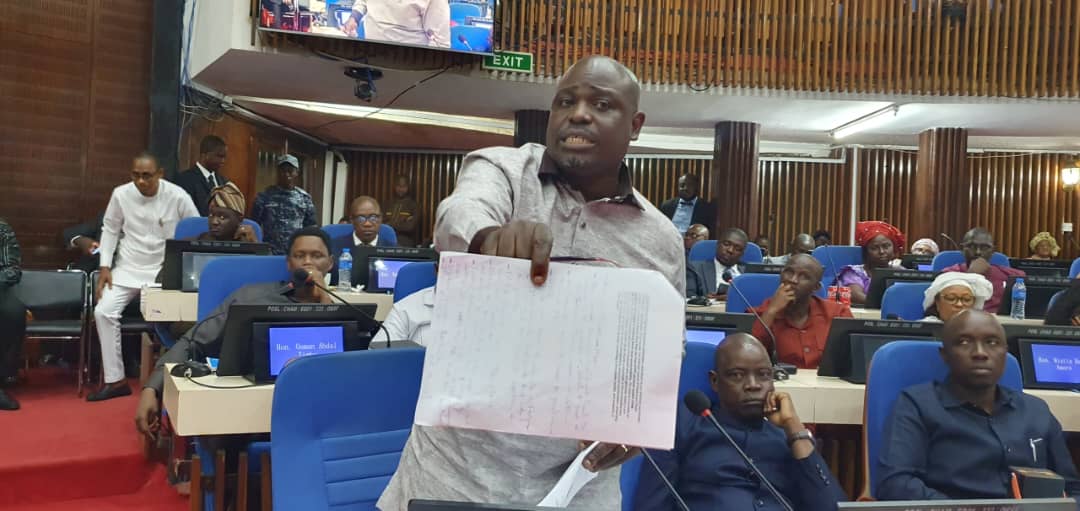
The Opposition Leader in Parliament, Hon. Abdul Kargbo, has reaffirmed the All People’s Congress (APC) opposition to several provisions in the proposed Constitutional Amendment Bill, insisting that constitutional reforms must “strengthen democracy, uphold due process and reflect the will of the people”. He adds that, ‘Democracy belongs to the people, not political parties’.
Contributing to the parliamentary debate on Tuesday 28 July 2026, Hon. Kargbo argued that “the Bill departs from recommendations reached during the Tripartite Committee consultations and other national engagements”.
He questioned why the proposed legislation seeks to replace the recommended requirement of securing more than 50 percent of the valid votes with 20 percent of the votes in two thirds of the districts, instead of maintaining the previously discussed threshold.
Hon. Kargbo reminded Members of Parliament that recommendations emerging from consultations “do not automatically become law unless they receive Cabinet approval before being incorporated into legislation”.
The Opposition Leader mounted a strong defence of the First Past the Post electoral system, describing it as “the best mechanism for ensuring direct accountability between Members of Parliament and the citizens they represent”. He added further that “Constituency-based representation allows voters to maintain regular contact with their elected representatives and hold them accountable for their performance”.
He argued that, “Proportional Representation transfers excessive authority from voters to political party executives, thereby limiting the ability of citizens to determine who represents them in Parliament”.
Hon. Kargbo further maintained that the First Past the Post system had historically provided opportunities for independent candidates and smaller political parties to secure representation whenever they enjoy genuine public support.
He noted that previous Parliaments included Independent Members of Parliament and representatives from several political parties, warning that such opportunities had become increasingly limited under the Proportional Representation system.
Responding to claims that countries operating Proportional Representation perform better on the Human Development Index, Hon. Kargbo dismissed the argument, stating that national development depended on strong democratic institutions, quality healthcare, quality education, independent electoral bodies, respect for the rule of law and public confidence in governance rather than the type of electoral system a country adopts.
He cited several countries using Proportional Representation that continue to rank among the lowest on the Human Development Index, arguing further that “electoral systems alone do not determine development outcomes”.
Addressing concerns over women’s political participation, Hon. Kargbo rejected suggestions that “the APC does not support women”, noting that the party had already entrenched a 30 percent quota for women in its Constitution.
He stated that the APC supported the Gender Equality and Women’s Empowerment legislation and maintained that political parties could successfully promote women’s representation under either electoral system.
The Opposition Leader also referred to submissions from the Council of Paramount Chiefs and other stakeholders which, he said, favoured retaining the First Past the Post system because it guarantees stronger local accountability and preserves opportunities for independent candidates.
Hon. Kargbo expressed concerns over proposals relating to the use of national census data for electoral boundary delimitation, warning that such provisions could encourage future governments to delay constitutionally required population censuses for political advantage.
He called on Parliament to ensure that “constitutional amendments do not undermine existing constitutional obligations or weaken democratic governance”.
Hon. Kargbo concluded by stressing that, “the APC is not opposed to constitutional reforms but remains committed to supporting amendments that strengthen democracy while opposing provisions that undermine the people’s right to freely choose their representatives”.